GraphQL API Development
GraphQL is a query language for APIs that lets each screen ask for exactly the data it needs in a single request. We use it for products with many screens, several apps or data spread across different services.
What it is. When we use it.
GraphQL is an open specification, first developed at Facebook, for building APIs around a typed schema. Instead of many fixed endpoints, clients send a query that describes the fields they want, and the server returns exactly that shape. The schema doubles as documentation, and tools can generate typed code for the web and mobile apps from it.
We use GraphQL when several clients, such as a web app, a mobile app and an admin panel, need different views of the same data, or when one screen combines data from several services. For simple products with one client, a well-designed REST API is often all you need, and we will say so.
When we reach for it
- Web, mobile and admin apps all read the same data in different ways
- Screens combine data from several services or databases
- Mobile apps on slow networks should make fewer, smaller requests
- Features need real-time updates through subscriptions
Why we choose it.
What GraphQL brings to the products we build, and why it earns its place in the stack.
Exactly the right data
Each screen asks for the fields it needs, with no over-fetching and no extra round trips.
Typed and documented
The schema describes every type and field, and doubles as living documentation.
Generated client code
Typed hooks and models are generated from the schema for web and mobile.
One gateway
A single API can bring together several services and databases behind one schema.
What we build with it.
The products and features we build with GraphQL, from our services and the industries we know.
APIs for web and mobile
One typed API shared by your web app, mobile app and admin panel.
Collaboration tools
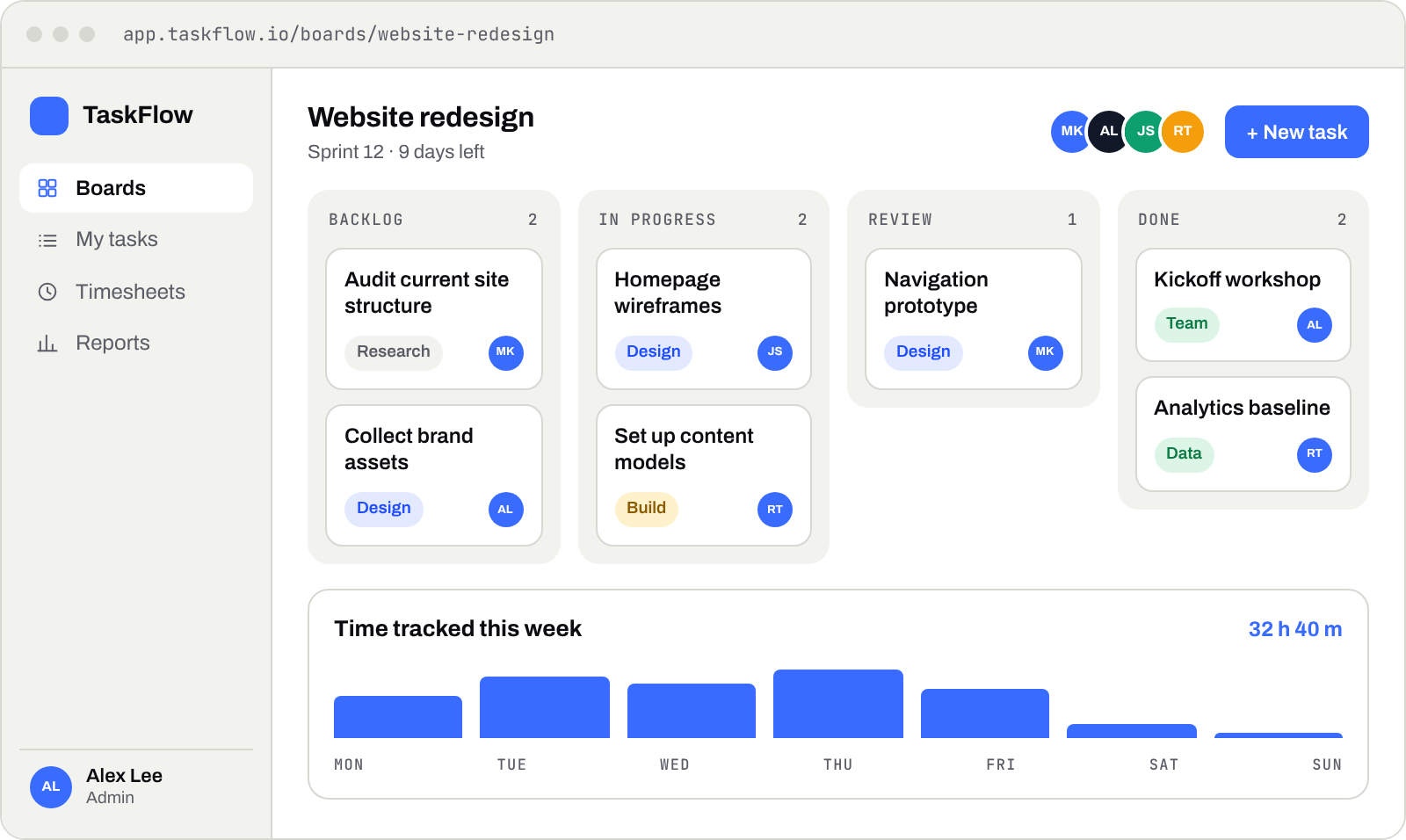
Task boards and project tools with live updates through subscriptions.
Data-hungry mobile apps
Fewer, smaller requests so screens load quickly on mobile networks.
API gateways
A single entry point in front of older services and third-party APIs.
Shipped with it.
Projects from our portfolio built with GraphQL. Open one for its screens, features and stack.
Better together.
The technologies we most often combine with GraphQL. Each has its own page.
From first call to live app.
A proven five-stage process that eliminates guesswork, keeps you in control, and delivers on time.
Discovery & Scoping
We learn your business, map your users, and define exactly what needs to be built. No guesswork. No assumptions.
Design & Prototype
Wireframes and interactive prototypes so you can see and feel the app before a single line of code is written.
Development Sprints
Agile two-week sprints. You see real progress regularly. Feedback is built in — not bolted on at the end.
QA & Testing
Rigorous testing across devices, edge cases, and real-world scenarios. We find the bugs so your users don't.
Launch & Support
App Store submission, launch support, and an ongoing maintenance plan to keep everything running smoothly.
Questions, answered.
What clients most often ask us about GraphQL. Something else on your mind? Ask us directly.
01GraphQL or REST: which should we use?
REST is simpler and perfectly fine for many products. GraphQL earns its place when several apps need different views of the same data, or when screens pull from many sources. We recommend based on your clients and data, not fashion.
02Is GraphQL secure?
It is as secure as its implementation. We add authentication, field-level authorisation, query depth and cost limits, and rate limiting so a single query cannot overload the server.
03Does GraphQL work with our existing REST APIs?
Yes. A GraphQL layer can sit in front of existing REST services and databases, so you can adopt it gradually without rewriting the back end.
04Can GraphQL do real-time updates?
Yes, through subscriptions, usually over WebSockets. They suit live dashboards, chat and collaborative tools.
05How do you avoid slow GraphQL queries?
Batching and caching database calls, limiting query depth, and monitoring the slowest operations in production.
06Do mobile apps benefit from GraphQL?
Often, yes. A mobile screen can fetch everything it needs in one request, which helps on slow or unreliable networks, and typed client code generated from the schema reduces bugs when the API changes.
Ready to build something that actually works?
Get a free strategy call with our team. No hard sell. No obligation. Just an honest conversation about what you need to build and whether we're the right fit.